Crime and Criminal Justice
Crime and criminal justice are important topics in sociology because they help us understand how societies define acceptable behavior and how laws are enforced to maintain order. Deviance refers to behavior that violates social norms, while crime is behavior that violates formal laws established by society. Although crime is often associated with violence, most crimes are actually property crimes, such as burglary, theft, and motor vehicle theft. Sociologists study crime not only to understand why it happens but also to examine how social factors like poverty, education, and neighborhood conditions influence criminal behavior.
Another important concept in studying crime is how society responds to it through the criminal justice system, which includes the police, courts, and correctional institutions. Crime is not always accurately reflected in official reports because many crimes go unreported. For example, victims may choose not to report crimes due to fear, embarrassment, or the belief that the police cannot help. Because of this, sociologists use surveys such as the National Crime Victimization Survey (NCVS) to gather information about crimes that were never reported to law enforcement.
Media coverage can also shape how people view crime. News outlets often highlight violent crimes and dramatic cases, which can lead the public to believe crime is more common than it actually is. In reality, violent crime makes up a smaller portion of total crime compared to property crime. Additionally, crime rates can vary depending on factors such as age, gender, and location. Young people between the ages of 15 and 24, for example, tend to have higher rates of offending compared to older adults.
Understanding crime from a sociological perspective helps policymakers and communities develop strategies to reduce crime. These strategies often include improving education, expanding early childhood programs, reducing poverty, and strengthening community resources. By focusing on social conditions that contribute to crime, societies can work toward safer communities and more effective approaches to justice.
Sociological Perspectives on Crime
The three major sociological perspectives explain crime in different ways. Functionalism views crime as a normal part of society that can serve functions such as clarifying moral boundaries and promoting social change. Conflict theory argues that crime is shaped by inequalities in society and that laws are often created to benefit powerful groups while controlling marginalized populations. Symbolic interactionism focuses on everyday interactions and suggests that crime can result from processes such as labeling, where individuals are labeled as criminals and begin to act according to that label. Together, these perspectives help sociologists understand the complex causes and social consequences of crime.
NCVS Crime Data Example
According to the National Crime Victimization Survey (NCVS), property crimes such as theft and burglary occur more frequently than violent crimes. Data from Criminal Victimization, 2022 shows that millions of property crimes occur each year in the United States, while violent crimes occur at lower rates (Bureau of Justice Statistics, Criminal Victimization, 2022, Tables 1–3). The NCVS also reveals that a large portion of crimes are not reported to the police, especially crimes like theft or simple assault. Reasons for not reporting include believing the crime was minor or that the police would not be able to recover property. These findings highlight how official crime statistics may underestimate the true amount of crime in society.
https://bjs.ojp.gov/programs/ncvs
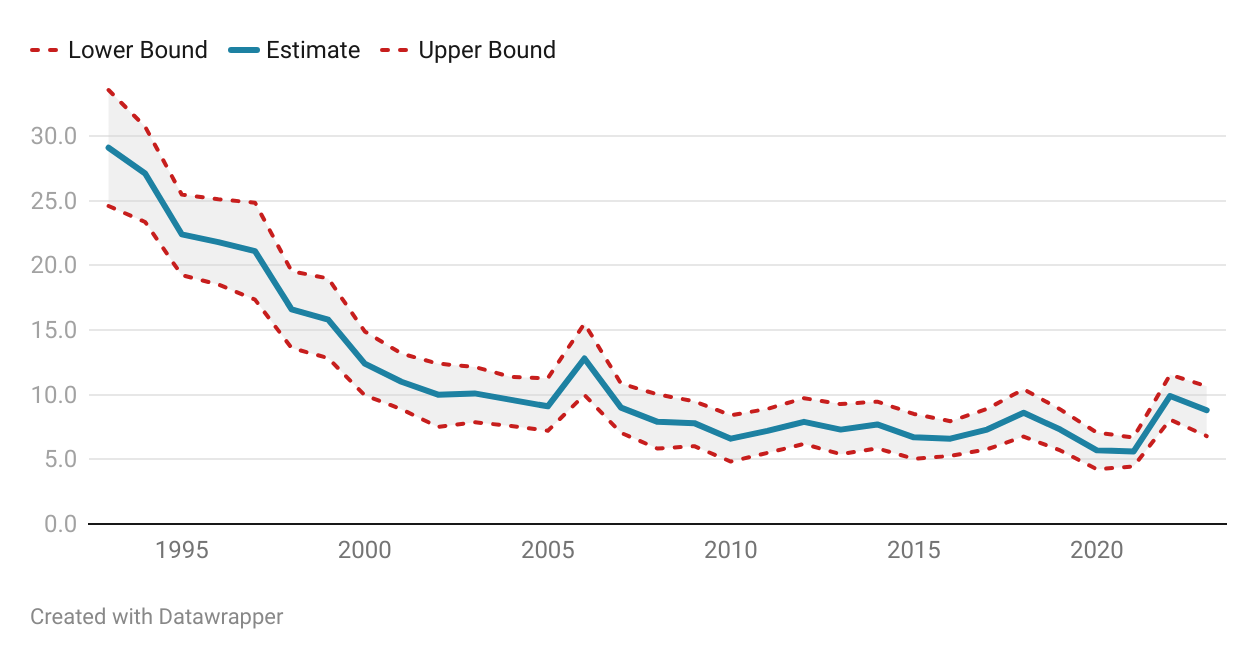
Data from the National Crime Victimization Survey shows trends in property and violent crime in the United States.
Local Organization Addressing Crime
One organization working to address crime and violence in Central Florida is Crimeline, a nonprofit organization that helps law enforcement solve crimes by allowing citizens to submit anonymous tips. Crimeline’s mission is to reduce crime in the community by encouraging people to report information about criminal activity while protecting their identity. The organization offers rewards for information that leads to arrests and works closely with law enforcement agencies throughout Central Florida. Programs like this help strengthen community involvement in crime prevention and support safer neighborhoods.
Website:
https://crimeline.org


Comments
Post a Comment