Children, Families, and Schools
Children grow and develop within important social institutions, especially families and schools. These institutions play a major role in shaping children’s behavior, values, and opportunities in life. Sociologists study how family structure, parenting styles, and educational systems influence children’s development and contribute to broader social issues. Families provide early socialization, which is the process through which children learn social norms, cultural values, and expected behaviors. Schools continue this process by teaching academic knowledge as well as social skills such as cooperation, discipline, and responsibility.
Families in the United States have changed significantly over time. Today there are many different family structures including single-parent households, blended families, and households with cohabiting parents. These changes can affect children’s access to resources, supervision, and emotional support. Sociologists also study educational inequality, which refers to unequal access to educational opportunities based on factors such as socioeconomic status, race, and neighborhood conditions. Children from wealthier families often attend schools with more resources, smaller class sizes, and more academic opportunities compared to children from lower-income communities.
Schools also play a major role in preparing children for future employment and participation in society. Teachers, administrators, and educational policies influence students’ academic success and long-term opportunities. However, challenges such as overcrowded classrooms, limited funding, and unequal access to technology can affect the quality of education students receive. These issues highlight why sociologists examine schools and families together when studying social problems that affect children.
Understanding the relationship between families, schools, and society helps researchers identify ways to improve children’s outcomes. By studying patterns in family life, school performance, and demographic differences, sociologists can better understand the causes of educational disparities and propose policies that support children’s development and well-being.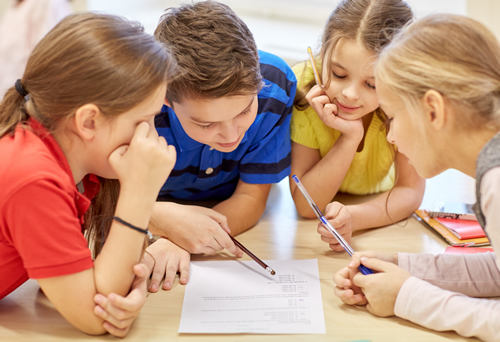
Schools are key institutions where children develop knowledge, social skills, and future opportunities.
Sociological Perspectives
The three major sociological perspectives offer different ways of understanding families and education. Functionalism views families and schools as institutions that help maintain social stability by socializing children and preparing them for adult roles in society. Conflict theory focuses on inequalities within families and education systems, arguing that wealth, race, and social class influence access to resources and opportunities. This perspective suggests that schools can reinforce social inequality through differences in funding and access to advanced programs. Symbolic interactionism examines everyday interactions between parents, teachers, and students. It focuses on how labels, expectations, and communication affect children’s self-concept and academic performance.
Data Analysis (Florida Department of Education)
According to the Florida Department of Education (FLDOE), data on school performance and student achievement show significant differences across demographic groups. For example, statewide assessment results reveal gaps in reading and math scores between students from different socioeconomic backgrounds and racial or ethnic groups. These patterns suggest that income level, community resources, and family background can influence educational outcomes (FLDOE, Assessments Section). Sociologists studying social problems related to education use this type of data to identify patterns of inequality and develop policies aimed at improving student success. Examining factors such as race, income, and geographic location helps researchers understand why some students face greater educational challenges than others.
Source: Florida Department of Education – Assessments Data
https://www.fldoe.org
Community Organization Addressing Family and Education Issues
One organization working to support families and children in Florida is Boys & Girls Clubs of Central Florida. The organization’s mission is to inspire and enable young people to reach their full potential as productive and responsible citizens. They provide after-school programs, mentoring, academic support, and leadership development opportunities for children and teenagers. These programs help students improve academic performance, develop social skills, and stay engaged in school. Many of their initiatives focus on youth in underserved communities where families may face economic challenges or limited educational resources. By offering tutoring, safe spaces, and educational programming, the organization helps address social problems related to educational achievement and youth development.
Organization Website:
https://bgccf.org


Comments
Post a Comment